.webp)


Discover how a GOLFTEC club fitting uses data-driven insights and expert coaching to match you with the perfect clubs - tailored to your swing for maximum performance.
Why Augusta National Is One of the Hardest Golf Courses in the World
When golfers think about an iron fitting, the first question they often ask is, "How much further will I hit it?" While distance is certainly part of the conversation, it is not the only thing we are looking for. In fact, at GOLFTEC, we are much more interested in finding the combination of equipment and launch conditions that gives you the best chance of hitting the shots you need to hit on the golf course.
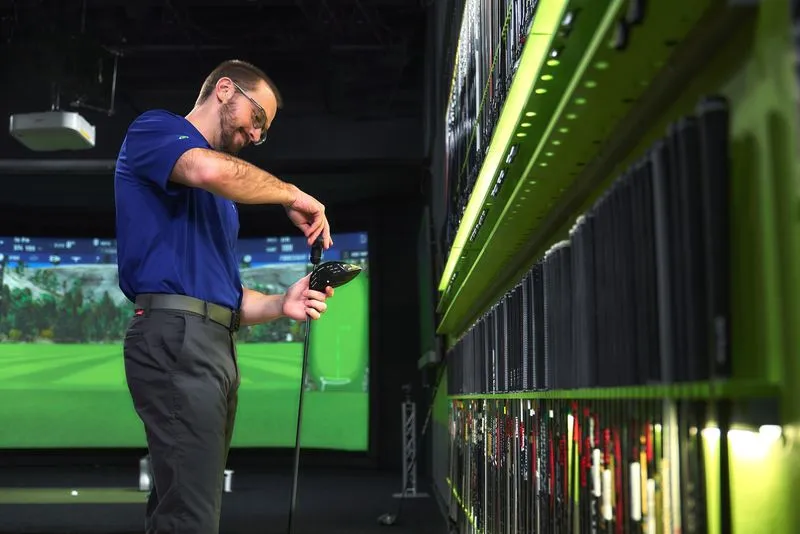
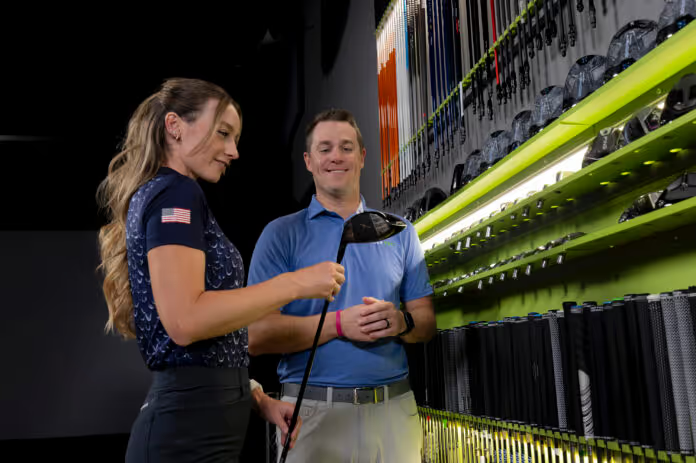
By the end of an iron fitting at GOLFTEC Singapore, my promise is simple. We will have identified the specifications of the clubs that suit you best, including length, lie angle, shaft type, shaft flex and grip. You will also have tried different brands and models, allowing you to see which clubs you prefer and, more importantly, which ones produce the best outcome data for your individual swing.
Why Iron Specifications Matter
So, why do those specifications matter?
Length. The correct length of an iron gives you the best chance of returning the club to the ball in a repeatable way. It can influence where you strike the face and where the club interacts with the ground. If the club is too long or too short, you may be making compensations in your swing simply because the equipment does not fit you properly.
Lie angle. Lie angle is also important because it influences the orientation of the clubface and sole as the club reaches the ball. If the lie is inappropriate for your delivery, it can affect both strike and direction. We can measure this rather than relying on a golfer's perception of what looks or feels right.
Shaft type and flex. Shaft type and flex are another part of the fitting process. The shaft needs to work with the way you deliver the club, rather than simply being selected because it has a particular label such as regular, stiff or extra stiff. Appropriate shaft characteristics can help produce a more consistent delivery and launch condition. There is no universally correct shaft flex. There is only the shaft that is appropriate for you.
Why Distance Is Not the Whole Story
This is where the data becomes particularly useful.
At GOLFTEC, we do not want to fall into the trap of becoming obsessed with distance. We are looking for the best combination of ball speed, launch angle, back spin and landing angle to make sure the club is doing what we need it to do.
Imagine two different 7 irons.
7 iron A produces approximately 105mph of ball speed, launches at 17 degrees and generates 4,500 rpm of back spin. It carries around 145 yards and lands at approximately 35 degrees. Because of the relatively shallow landing angle and lower spin, it may continue rolling and finish around 160 yards.
7 iron B produces a similar ball speed, launches at 19 degrees and generates 5,800 rpm of back spin. It carries around 143 yards but lands considerably more steeply, around 45 degrees or more, and may finish around 150 yards.
These figures are illustrative rather than targets, as the exact result will depend on strike, clubhead speed, loft and other launch conditions. However, they demonstrate an important point. If you only looked at the total distance, you might think 160 yards was clearly the better result.
But ask yourself what happens when that shot lands on a green.
If your 7 iron needs 15 yards of bounce and roll before it stops, you have very little control over where the ball finishes. The second shot may carry two yards less but give you significantly more stopping power. For an iron, that can be far more useful. On Singapore courses, where greens are often guarded by water and bunkers, that stopping power can be the difference between a birdie chance and a dropped shot.
Landing Angle and Back Spin
This is why landing angle and back spin are so important. Carry distance tells us how far the ball travels through the air, but landing conditions tell us what happens when it gets there. Published 7 iron fitting data also shows that launch angle, spin rate and landing angle need to be considered together rather than chasing one individual number.
Making Sure Your Irons Work as a Set
Once we have established the right performance characteristics, we also need to make sure the set works as a set. We will look at your yardage gapping to make sure there are no unnecessary overlaps or large gaps between clubs. There is little point having a 5 iron that goes almost the same distance as your 6 iron, or a gap between your longest iron and your next club that leaves you without a sensible option on the course.
Irons or Hybrids?
That naturally leads to another question: where should your irons finish?
For some golfers, a traditional iron set will work perfectly well through the longer irons. For others, a hybrid may provide a better combination of launch, carry and consistency. The answer should be based on your data and what you need from the club, rather than simply following what somebody else has in their bag.
Measure, Because Anything Else Is Guessing
Ultimately, an iron fitting should not be about finding the club with the biggest number on the launch monitor. It should be about finding equipment that allows you to produce predictable, functional golf shots.
We measure length, lie, launch, spin, ball speed, landing angle, carry distance and gapping. We also consider how the clubs look and feel to you, because confidence and preference matter. We then use all of that information to make an informed decision about what belongs in your bag.
That is the value of a GOLFTEC Singapore club fitting. We do not need to guess which club, shaft or specification might work for you. We can measure it, assess the results and use the evidence to make a decision.
Measure, because anything else is guessing.
Book an iron fitting at GOLFTEC Singapore. At the time of writing, a club fitting costs SGD 195. See our plans and pricing for current details.

Play the best golf of your life. GOLFTEC Coaches use cutting-edge tech and proven methods to level up your game fast.
Book a Lesson
Play Better!