.webp)

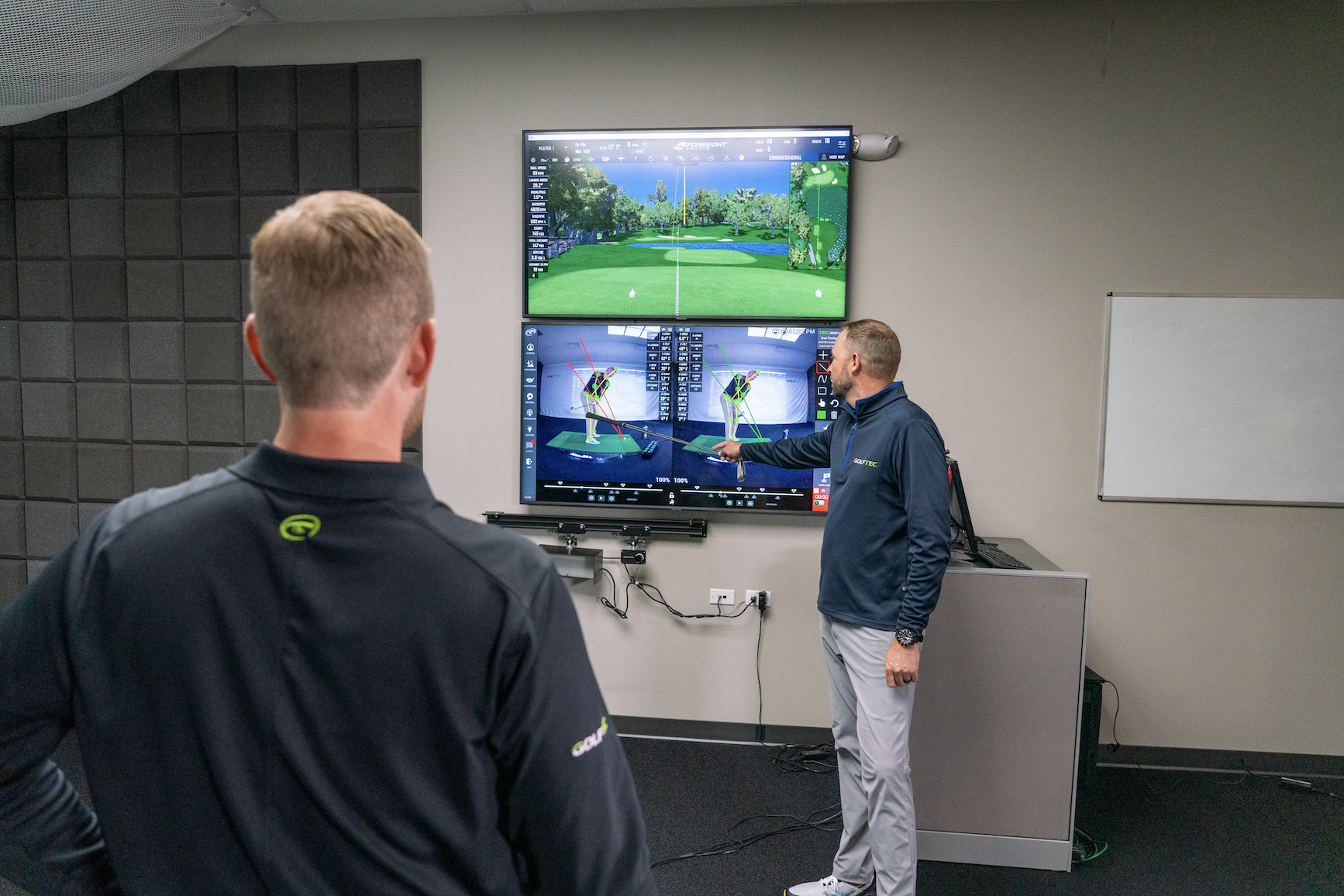
See what makes a GOLFTEC Swing Evaluation the best way to start improving your game - with personalized coaching, 3D swing analysis, and a clear plan for long-term success.
Why Augusta National Is One of the Hardest Golf Courses in the World
Why Your Ball Striking Isn’t Improving (And What Actually Fixes It)
Here’s the frustrating truth about ball striking: most golfers are trying to fix one thing when the problem is actually three.
They read a tip about turning more.
They adjust their posture.
They even invest in a new driver.
Then they go back to the range… and hit the same shots they’ve always hit.
It’s not a lack of effort. It’s a lack of clarity.
Most golfers are trying to solve isolated pieces of a much bigger puzzle—without ever seeing how everything connects.
The Real Formula Behind Better Ball Striking
Better ball striking comes down to three key variables:
- Your understanding of the swing (Technique)
- What your body is physically capable of doing (Conditioning)
- Whether your equipment supports both (Equipment)
When even one of these is misaligned, your swing compensates.
And that compensation?
That’s the shot pattern you’ve been living with.
01 — If You’re New, It’s Not Your Body
New golfers often jump straight into flexibility drills and mobility work before they even understand the basics of the swing.
That’s backwards.
If you’re early in your golf journey, your issue isn’t physical limitation—it’s lack of structure. You don’t yet have a clear mental model of what the swing should look like, feel like, or do.
You can’t improve movement that hasn’t been established.
Trying to “unlock your body” without a repeatable swing framework is like upgrading hardware without installing software. It won’t move the needle.
What you need first is:
- A clear, teachable swing model
- Something repeatable
- Something measurable
Once that foundation exists, then you can start identifying how your body supports—or limits—that movement.
02 — When You Understand the Swing, Your Body Becomes the Limiter
Every golfer reaches a stage where progress stalls.
You understand what you’re trying to do.
You’ve hit good shots before.
You know what it should feel like.
But you can’t reproduce it consistently.
This is where physical capability starts to matter.
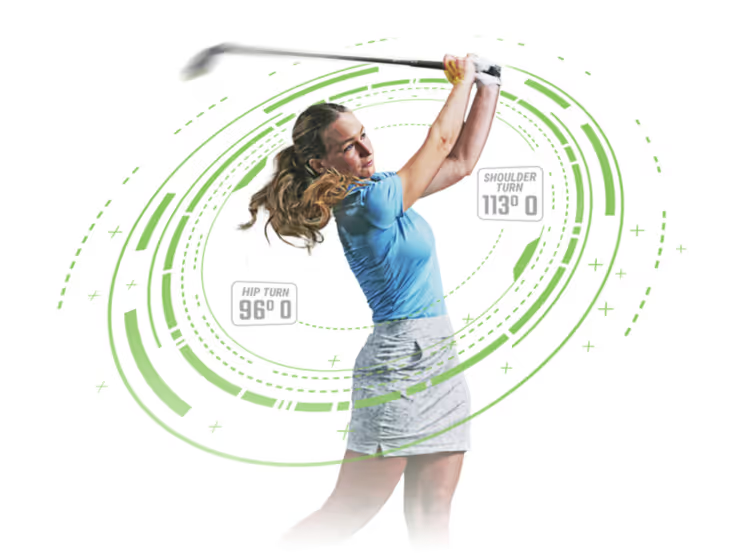
Your body isn’t just along for the ride—it actively shapes the swing you can make.
Common examples:
- Early Extension
Often caused by limited hip mobility or weak glute stability. The body moves toward the ball because it can’t rotate properly. - Loss of Posture
Usually linked to limited thoracic rotation. When the upper body can’t turn, it stands up instead. - Casting / Early Release
A sequencing issue. When the lower body doesn’t lead, the hands take over too early.
These aren’t just “swing mistakes.”
They are compensations.
Your swing is not random—it’s your body’s best solution based on its current capabilities.
03 — Why Lessons Don’t Always Stick
You’ve probably experienced this:
A lesson where everything clicks.
Ball flight improves.
You feel like you’ve figured it out.
Then a few days later… it’s gone.
Not because you forgot the tip—but because your body defaulted back to what it knows.
When a coach tells you to:
- “Turn more” → your body uses whatever range it has, then compensates
- “Stay in posture” → you hold it until impact forces you out
You’re not doing it wrong.
You’re trying to execute a movement your body isn’t ready to support.
That’s why swing changes alone often fail.
Understanding improves first—but without physical support, it doesn’t last.
The GOLFTEC TEC Framework
At GOLFTEC, improvement is built around three interconnected elements:
Technique
A repeatable swing pattern developed through coaching, video analysis, and structured practice.
Equipment
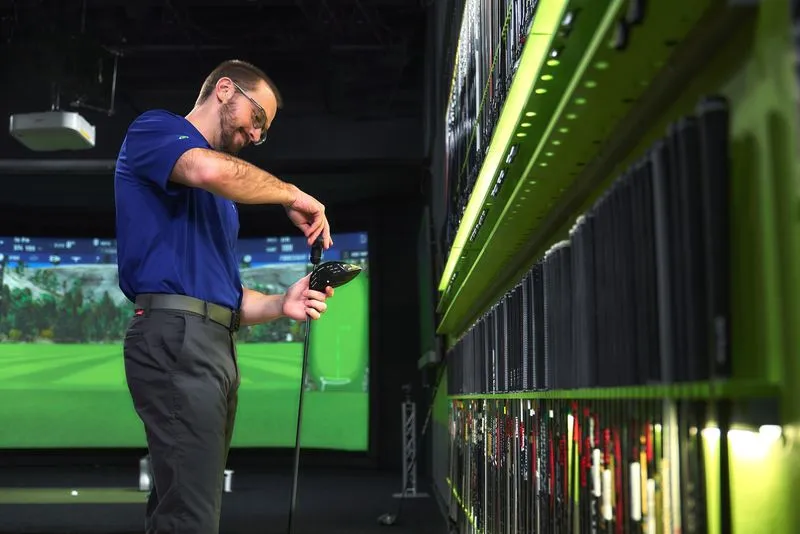
Clubs fitted to your swing through TECFIT—optimising shaft, loft, lie, and length to match how you actually move.
Conditioning
Your physical foundation—mobility, stability, and sequencing that allow your technique to function.
These are not separate pillars. They are interdependent.
- Conditioning without technique = effort without direction
- Technique without conditioning = instruction your body can’t execute
- Both without proper equipment = built-in compensations
True improvement only happens when all three align.
04 — Equipment Matters More Than You Think
Equipment is often treated as optional. It’s not.
Poorly fitted clubs can create the same issues as physical limitations:
- Shafts that are too stiff → disrupt timing
- Incorrect lie angles → alter swing path
- Improper club length → force posture changes
These small mismatches create chain reactions throughout the swing.
TECFIT isn’t about finding the “best” clubs—it’s about finding the right clubs for your swing, your body, and your movement patterns.
Your equipment should support your swing, not fight it.
The Bottom Line
Most golfers spend years trying to fix one thing at a time.
They focus on the swing when it’s actually the body.
They train the body but ignore their equipment.
They upgrade equipment without fixing movement patterns.
That’s why progress feels inconsistent.
Better ball striking isn’t a single breakthrough moment.
It’s what happens when Technique, Equipment, and Conditioning are finally aligned.
When:
- Movement feels natural
- Contact becomes repeatable
- Speed shows up without force
That’s the difference between guessing—and actually improving.
Ready to Improve Your Ball Striking?
Start with a GOLFTEC Swing Evaluation and get a complete view of your swing, your body, and your equipment.
No guesswork. Just a clear, structured path to better golf.
Book your Swing Evaluation today and start building a swing that actually works.

Play the best golf of your life. GOLFTEC Coaches use cutting-edge tech and proven methods to level up your game fast.
Book a Lesson
Play Better!